So, you’re ready to trade the cubicle for the canyon, the sidewalk for the single-track. Your smartphone won’t cut it, and you need a tech sidekick that can keep up. In the world of adventure-ready wearables, two titans dominate the landscape: the rugged, data-crunching Garmin and the sleek, smart-savvy Apple Watch.
But which one is the true MVP for your outdoor pursuits? This isn’t about which is the “better” smartwatch overall—it’s about which is the better adventure partner. Strap in as we break down this trail-running, mountain-climbing, open-water-swimming rivalry.
The Contenders: A Quick Intro
Garmin (e.g., Fenix 8, Fenix 8 Pro, Epix Pro, Instinct 3, Enduro 3): Born from the world of aviation and marine GPS, Garmin is the grizzled, seasoned guide. These watches are built with one primary goal: to deliver unparalleled performance metrics and navigation for athletes and adventurers. They mean business.
The Garmin lineup has evolved significantly in 2024-2025. The Fenix 8, launched in August 2024, represents a major consolidation—Garmin merged its AMOLED-equipped Epix line into the Fenix brand, offering both AMOLED and solar MIP (memory-in-pixel) display options. The Fenix 8 comes in three AMOLED sizes (43mm, 47mm, 51mm) and two solar sizes (47mm, 51mm), with prices ranging from $999 to $1,199. The September 2025 Fenix 8 Pro added LTE cellular connectivity, two-way satellite messaging, and an optional MicroLED display on the 51mm model, pushing prices to $1,199-$1,999.
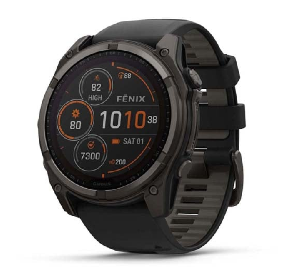
For those seeking ultimate battery life, the Enduro 3 ($899) delivers up to 40 days in smartwatch mode and 110 hours in GPS mode, all while maintaining the Fenix 8’s core features minus the speaker, microphone, and dive capabilities. The newly announced Instinct 3 series (January 2025, starting at $399-$449) brings ruggedness and long battery life to a more affordable price point, now available in both AMOLED and solar variants.
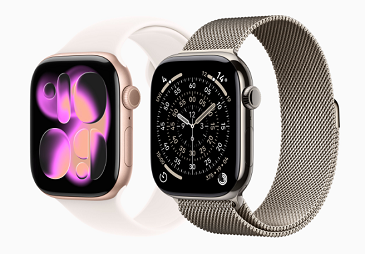
Apple Watch (Series 11 & Ultra 3): The Apple Watch is the charismatic, all-star athlete of the smartwatch world. It seamlessly integrates into your digital life. With the introduction of the Apple Watch Ultra in 2022 and its successors, Apple made a direct, aggressive play for Garmin’s territory, boasting enhanced durability and adventure-focused features.
The latest Apple Watch Series 11, released in September 2025, represents a significant evolution with up to 24 hours of battery life (up from 18 hours in previous standard models), groundbreaking hypertension notifications, sleep score features, and 5G connectivity. Priced from $399, it offers the most comprehensive health feature set in any Apple Watch yet.
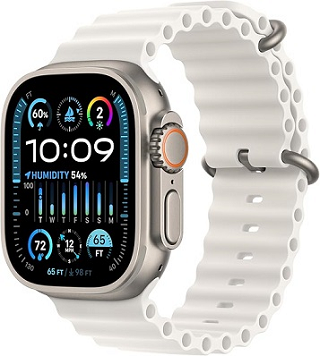
The Apple Watch Ultra 3, also launched September 2025 at $799, targets serious adventurers with its 49mm titanium case, up to 42 hours of battery life (up from 36 hours in Ultra 2), dual-frequency GPS, and new satellite communication capabilities including emergency SOS, texting, and location sharing via satellite when off-grid. With 20 hours of GPS battery life in Low Power Mode and up to 72 hours of total battery life in Low Power Mode, the Ultra 3 narrows the gap with Garmin—though not completely.
Let’s get into the nitty-gritty.
Round 1: Battery Life – The Marathon vs. The Sprint
This is the most significant, no-contest differentiator.
Garmin: Think of the Energizer Bunny on an energy drink. The current Garmin flagship lineup offers staggering endurance. The Fenix 8 AMOLED (51mm) delivers up to 29 days in smartwatch mode and 84 hours with continuous GPS tracking. The solar-equipped Fenix 8 Solar (51mm) extends this to 48 days in sunny conditions. Real-world testing shows these estimates hold up remarkably well—users consistently report getting a full week of battery life even with heavy GPS use and music streaming.
The Enduro 3 takes battery performance to another level entirely: 40 days in smartwatch mode without solar charging, extending to potentially indefinite battery life with adequate sun exposure. In GPS mode, it provides 110 hours of tracking, and up to 320 hours with solar charging in optimal conditions. This makes it the undisputed champion for ultramarathoners, multi-day thru-hikers, and expedition adventurers.
Even the more affordable Instinct 3 AMOLED offers up to 24 days in smartwatch mode, while the Instinct 3 Solar models can achieve unlimited battery life with sufficient sunlight exposure. For a multi-day backpacking trip, a week-long expedition, or any adventure where you won’t see a power outlet for days or weeks, a Garmin is the only viable choice. You simply won’t find a charging port on the summit of Kilimanjaro or deep in the Patagonian wilderness.
Apple Watch: Even the mighty Apple Watch Ultra 3 is a sprinter in this race. You’ll get up to 42 hours of normal use (a 6-hour improvement over the Ultra 2’s 36 hours) and approximately 20 hours with continuous GPS in Low Power Mode. The standard Apple Watch Series 11 now offers “true” all-day battery life of 24 hours—a meaningful improvement over the previous 18-hour claim, but still requiring daily charging for most users.
In Low Power Mode, the Ultra 3 can stretch to 72 hours, and the Series 11 to 38 hours—impressive for an Apple Watch, but nowhere near Garmin territory. Real-world testing confirms these numbers hold up: the Ultra 3 can handle a 10-hour GPS hike and still have 50% battery remaining, making it suitable for weekend adventures with charging opportunities.
For a long day hike, a weekend camping trip, or activities where you can recharge nightly, it’s perfectly adequate. For anything more remote, extended, or involving multiple consecutive days of GPS tracking, you’ll be playing a stressful game of battery conservation, carrying portable chargers, or accepting that your watch will die before your adventure ends.
Winner: Garmin. It’s not even close. For true, off-grid adventures lasting multiple days or requiring extended GPS tracking, battery life is king, and Garmin wears the crown. The gap has narrowed with the Ultra 3’s improvements, but we’re still talking about 2-3 days versus weeks or even months.
Round 2: Durability & Design – The Tank vs. The Tank Top
Garmin: Garmin watches are built like tanks that happen to tell time. The Fenix 8 series features sapphire crystal screens, titanium or stainless steel bezels, and military-grade (MIL-STD-810) construction rated for thermal and shock resistance. The 10ATM water resistance rating means they’re good for 100 meters of depth. The Fenix 8 even adds dive-specific features with depth sensors certified for recreational scuba diving to 40 meters.
The leakproof button design on the Fenix 8—a response to reported issues with salt water affecting earlier models—ensures reliable operation in marine environments. The Enduro 3, despite being lighter (just 63g with strap), maintains this rugged ethos with fiber-reinforced polymer construction. The Instinct 3 adds metal-reinforced bezels to its signature ultra-rugged design.
The design philosophy is unapologetically utilitarian: these are tools first, fashion accessories second. They’re thick, prominent, and make a statement on your wrist. The always-on MIP displays remain perfectly readable in direct sunlight—a crucial advantage when you’re checking your navigation on a sun-drenched ridge or in blinding snow. However, as one reviewer noted, in dim forest conditions, AMOLED displays significantly outperform MIP screens for readability.
The Fenix 8 represents a design evolution with reduced bezels and larger screen-to-body ratios. The 47mm model now sports the same 1.4-inch display as the 51mm, maximizing screen real estate without increasing overall size—a welcome change for those who want navigation-friendly screens without wearing “a brick” on their arm.
Apple Watch: The Apple Watch Ultra 3 is Apple’s response to the adventure market, and it’s legitimately tough. The 49mm Grade 5 titanium case provides excellent durability while remaining surprisingly light. The raised titanium rim protects the flat sapphire crystal display from impacts, and the watch meets the same 10ATM water resistance rating as Garmin (100 meters). The Ultra 3 includes depth gauge functionality to 40 meters and water temperature sensors, making it suitable for snorkeling and recreational water sports, though it lacks the dive-specific certifications of the Fenix 8.
The Action Button—a customizable physical button unique to the Ultra line—provides quick access to frequently used functions, invaluable when wearing gloves or during activities. The 86-decibel emergency siren adds a safety feature absent from most Garmin models.
What sets the Apple Watch apart is its aesthetic versatility. It transitions seamlessly from the trail to the office, from a technical alpine climb to a business dinner. The Series 11, with its slimmer 42mm and 46mm aluminum or titanium cases, offers even more everyday wearability while maintaining respectable durability with IP6X dust resistance and 50-meter water resistance.
The display technology differs fundamentally from Garmin’s approach. Both the Ultra 3 (3,000 nits peak brightness) and Series 11 (2,000 nits) feature brilliant LTPO AMOLED displays that are stunning indoors and in most outdoor conditions. However, they can struggle with readability in certain bright sunlight scenarios, particularly at oblique viewing angles—though the Ultra 3’s extreme brightness largely mitigates this issue.
Winner: Draw. Both are incredibly durable for 99% of adventures. Garmin feels more purpose-built for abuse with its military-grade construction, always-readable MIP displays (on solar models), and specialized diving certifications. The Apple Watch Ultra 3 offers impressive ruggedness in a package that doubles as an elegant smartwatch, while the Series 11 provides suitable durability for active lifestyles with superior everyday aesthetics. Choose based on whether you prioritize specialized toughness (Garmin) or versatile style (Apple).
Round 3: Navigation & Mapping – The Topo Map vs. The City Guide
Garmin: This is Garmin’s home turf, and they dominate it completely. Built-in topographic maps, detailed trail databases, and comprehensive navigation features are industry standards across the Fenix and Enduro lines. You get preloaded TopoActive maps covering regions worldwide, the ability to follow pre-loaded GPX tracks from platforms like Strava and Komoot, and the legendary TracBack feature that guides you back along your exact route—a potential lifesaver when weather deteriorates or you become disoriented.
The Fenix 8 introduces enhanced navigation with improved controls, dynamic round-trip routing that adjusts on the fly based on your location and preferences, and ClimbPro—a feature that automatically displays upcoming climbs with gradient, distance, and elevation gain information. This helps you pace your effort on challenging ascents, whether you’re trail running in the mountains or tackling a multi-pitch climb approach.
The always-on MIP displays (on solar models) mean you can glance at your navigation anytime without gestures or button presses—critical when scrambling on technical terrain or when your hands are occupied. The AMOLED Fenix 8 models offer touch-screen navigation combined with traditional button controls, giving you options based on conditions.
Multiband GPS (available across the Fenix 8, Enduro 3, and Instinct 3 AMOLED) utilizes both L1 and L5 satellite frequencies, along with multiple satellite systems (GPS, GLONASS, Galileo, BeiDou, QZSS), for exceptional accuracy even in challenging environments like deep canyons, dense forests, and urban corridors. SatIQ technology automatically switches between GPS modes to optimize accuracy and battery life based on conditions.
Real-world accuracy testing confirms Garmin’s GPS superiority in demanding conditions. When compared side-by-side in steep, tree-covered terrain with nearby cliffs, Garmin watches consistently deliver cleaner, more accurate tracks that align closely with actual footsteps on satellite imagery.
A notable limitation: The newly released Instinct 3, despite being marketed as an outdoor watch and priced at $399-$449, lacks offline maps entirely—a controversial omission when competitors at similar or lower price points include this feature. Navigation on the Instinct 3 relies on breadcrumb trails and turn-by-turn directions, which works but feels dated in 2025.
Apple Watch: Navigation is capable and improving, but remains more reliant on your iPhone and cellular connectivity for the full experience. The Ultra 3 and Series 11 feature Apple’s excellent dual-frequency GPS (L1 and L5) that delivers impressive accuracy, often plotting cleaner tracks than even Garmin’s multiband system in urban environments and many outdoor scenarios.
You can download map areas for offline use in Apple Maps, and the Compass app includes Waypoints and Backtrack features for marking locations and retracing your path. Third-party apps like AllTrails, Gaia GPS, and WorkOutDoors significantly enhance navigation capabilities, offering topographic maps, route planning, and trail databases.
However, the experience isn’t as deeply integrated or instinctive as Garmin’s native system. The screen, while beautiful and bright, uses raise-to-wake as default (though always-on is available), meaning you need to gesture or tap to view navigation during activities—less than ideal when maintaining three points of contact on a rock face or during technical descents.
The Ultra 3’s larger display and Wayfinder watch face (designed specifically for outdoor navigation) improve the experience considerably. The new satellite messaging capability adds a critical safety dimension—you can text emergency services, message friends and family, and share your location even when completely off-grid, a feature the standard Apple Watch Series 11 lacks.
For urban adventures, road running, cycling, and recreational hiking on established trails, Apple Watch navigation is excellent. For technical backcountry navigation where a wrong turn could have serious consequences, where you need detailed topographic information at a glance, or for multi-day expeditions in remote areas, Garmin’s dedicated, offline-first mapping remains the gold standard.
Winner: Garmin. For serious backcountry navigation, wilderness adventures, and situations where reliable, glanceable maps could be life-saving, Garmin’s comprehensive mapping, always-on displays, and navigation-first design philosophy make it the clear choice. Apple Watch offers competent navigation for most outdoor activities, but it’s a smartwatch that does navigation, not a navigation device that happens to be a smartwatch.
Round 4: Fitness & Health Metrics – The Coach vs. The Doctor
Garmin: Garmin provides a firehose of training-specific data for the data-obsessed athlete. Beyond standard heart rate monitoring, you get an extensive suite of performance analytics:
- VO2 Max Estimation: Calculated using pace and heart rate data, providing aerobic fitness assessments (typically within 5% of lab-tested values when using quality heart rate data)
- Training Load & Load Focus: Tracks workout intensity and duration to show how different types of training (anaerobic, aerobic, low aerobic) impact your body over time
- Training Status & Readiness: Tells you if your training is productive, maintaining, peaking, or unproductive based on recent workout patterns
- Recovery Time: Estimates how long until your next hard workout based on training load
- Performance Condition: Real-time assessment during activities, scoring from -20 to +20 to show how your current performance compares to your baseline
- HRV Status: Heart rate variability tracking for recovery and stress assessment
- Training Effect: Scores aerobic and anaerobic benefits of each workout
Sport-specific features elevate Garmin further. ClimbPro for trail runners and hikers automatically displays upcoming climbs with gradient profiles. Surf tracking monitors wave count and distance. Golf features include course mapping and shot tracking. The Fenix 8 introduces Strength Workout Animations and Muscle Map (AMOLED models) that visualize which muscle groups you’ve worked.
The latest Elevate V5 optical heart rate sensor (on Fenix 8, Fenix 8 Pro, Enduro 3) adds ECG capability and improved accuracy, though chest strap pairings remain the gold standard for precision during high-intensity intervals. Real-world testing shows GPS-based pace and distance measurements that consistently align within hundredths of a mile across multiple units.
This data-centric approach helps serious athletes understand their body’s performance, manage training load to avoid overtraining, and optimize recovery. However, the metrics can sometimes feel overwhelming or even discouraging—you might crush a long run only to be told your training is “unproductive” due to algorithm quirks, and VO2 Max estimates can fluctuate based on environmental conditions not fully accounted for by the algorithms.
Apple Watch: Apple focuses on holistic health rather than pure athletic performance, with an emphasis on accessibility and wellness for everyday users. The three-ring philosophy (Move, Exercise, Stand) gamifies daily activity in an intuitive, motivating way that works for athletes and casual users alike.
The health sensor suite is comprehensive and medically oriented:
- ECG (Electrocardiogram): FDA-cleared capability to detect atrial fibrillation, available since Series 4
- Blood Oxygen Monitoring: Continuous and on-demand SpO2 measurements (redesigned feature rolled out via iOS 18.6.1 and watchOS 11.6.1)
- Hypertension Notifications: Groundbreaking feature introduced with Series 11 and Ultra 3 that can detect patterns of high blood pressure by analyzing how blood vessels respond to heartbeats over 30-day periods
- Sleep Analysis: Comprehensive tracking with sleep stages (REM, Core, Deep), plus Sleep Apnea Notifications (watchOS 26)
- Wrist Temperature Sensing: Provides cycle tracking insights and retrospective ovulation estimates
- Irregular Rhythm Notifications: Alerts for high/low heart rate and atrial fibrillation
- Sleep Score: New feature in watchOS 26 that grades sleep quality based on duration, consistency, and sleep stage distribution
- Vitals App: Morning summary of key overnight metrics including heart rate, respiratory rate, wrist temperature, and sleep duration
The workout tracking is robust with custom workouts, heart rate zones, power metrics for cyclists, and elevation tracking. The new Workout Buddy feature (powered by Apple Intelligence) delivers personalized, spoken motivation during workouts based on your data and progress. Training Load analysis helps endurance athletes understand how workout intensity impacts their body over time—similar to Garmin but less granular.
VO2 Max estimation is available for outdoor walking, running, and hiking, with results categorized by age and sex. However, the training analysis depth doesn’t match Garmin’s sport-specific insights. You won’t get performance condition scores, detailed recovery recommendations, or ClimbPro-style tactical information.
What Apple excels at is making health monitoring accessible, actionable, and medically relevant. The FDA clearances for ECG and irregular rhythm notifications give real clinical utility. The hypertension notifications could save lives by detecting a condition that often goes undiagnosed. The seamless integration with iPhone Health app creates a comprehensive health record.
Winner: It depends on your goals. Garmin wins for athletes focused on performance optimization, detailed training analytics, and sport-specific metrics. If you want to understand your training load, dial in your pacing, analyze your VO2 Max trends, and get tactical information during activities, Garmin provides unmatched depth. Apple Watch wins for comprehensive health monitoring and wellness. If you want medically-validated heart monitoring, sleep analysis, early warning for potential health issues, and an approachable activity tracking system, Apple’s holistic approach is superior. Serious endurance athletes lean Garmin; health-conscious active individuals lean Apple.
Round 5: Smartwatch Features & Connectivity – The Specialist vs. The Superstar
Garmin: Garmin smartwatch features are functional but firmly secondary to fitness capabilities. You get:
- Smart Notifications: Texts, calls, emails, app alerts (when paired with smartphone)
- Music Storage & Streaming: Spotify, Amazon Music, Deezer downloads for phone-free listening
- Garmin Pay: Contactless payments at participating merchants
- Garmin Messenger: Two-way text messaging on compatible models
- Safety Features: Incident detection, assistance alerts
The Fenix 8 introduced a microphone and speaker, enabling voice commands (start activities, set alarms, enable do-not-disturb) and phone assistance access (Siri/Google Assistant). You can take phone calls directly on the watch—a convenience feature but not transformative.
The Fenix 8 Pro (September 2025) represents Garmin’s most significant connectivity leap with built-in LTE cellular and two-way satellite messaging via Garmin Response. This enables phone calls, texts, LiveTrack sharing, weather updates, and SOS alerts without a phone, both on cellular networks and via satellite in remote areas. It’s a game-changer for serious adventurers, though it comes at a premium ($1,199-$1,999) and requires subscription service.
The user interface, while improved in the Fenix 8 with better menus and organization, remains utilitarian. Third-party app selection through Connect IQ is limited compared to Apple’s ecosystem. Garmin watches feel like highly specialized tools that happen to have smart features, not smartwatches that happen to be good at fitness.
Apple Watch: This is a full extension of your iPhone and arguably the most capable smartwatch ecosystem available. You can:
- Take Calls & Send Texts: Full communication capabilities with voice dictation, Siri, and robust messaging
- Access Countless Apps: Everything from social media to productivity tools, games, navigation, and specialized utilities
- Stream Music & Podcasts: Apple Music, Spotify, and other services with offline download capability
- Use Apple Pay: Seamless contactless payments, transit card compatibility
- Control Smart Home: HomeKit integration for home automation
- Emergency Features: Fall Detection, Crash Detection, Emergency SOS
- Satellite Communication (Ultra 3): Emergency SOS, texting, and location sharing via satellite when off-grid
The Series 11 adds 5G cellular capabilities for faster app downloads, music streaming, and connectivity. The integration with the broader Apple ecosystem—AirPods, iPhone, Mac, iPad—creates a seamless digital experience unmatched by any competitor.
Siri voice commands, dictation for messages, and Apple Intelligence features (like the workout-motivating Workout Buddy) make the watch incredibly responsive and intuitive. The app ecosystem is vast, with thousands of high-quality third-party apps for virtually any need.
The Apple Watch excels at being a full-featured computer on your wrist that happens to be excellent at fitness tracking, rather than a fitness tracker that happens to have some smart features.
Winner: Apple Watch. It’s not close in this category. If you want a device that seamlessly handles communication, productivity, entertainment, smart home control, and serves as a true iPhone extension, the Apple Watch is the undisputed champion. Garmin’s smart features are adequate for athletes who primarily want a training tool, but they can’t compete with Apple’s comprehensive smartwatch capabilities. The Fenix 8 Pro’s LTE and satellite features narrow this gap for connectivity-focused adventurers, but the broader app ecosystem and integration still favor Apple significantly.
The Price Factor: Value Proposition
Let’s talk about your wallet, because these aren’t impulse purchases.
Garmin: Premium capability commands premium pricing. The Fenix 8 ranges from $999 (43mm AMOLED) to $1,199 (51mm AMOLED or Solar Titanium). The Fenix 8 Pro starts at $1,199 (47mm AMOLED) and reaches $1,999 for the 51mm MicroLED edition. The Enduro 3 sits at $899—positioned as the “value” flagship despite its near-$1,000 price tag.
More affordable options exist: The Instinct 3 AMOLED ($449) and Solar ($399) bring Garmin’s ruggedness and battery life to mid-range pricing, though you sacrifice maps and some advanced features. Previous-generation models offer compelling value: The Epix Pro Gen 2 frequently sells for $600-$650 (down from $999 MSRP), delivering nearly identical capabilities to the Fenix 8 AMOLED minus the microphone, speaker, and dive features.
Apple Watch: The Series 11 starts at a reasonable $399 (aluminum), extending to $749 (titanium). The Ultra 3 maintains its $799 price point—expensive but positioned below Garmin’s flagship pricing while offering exceptional smartwatch capabilities alongside serious adventure features.
The value equation depends on priorities. If you need Garmin’s specialized navigation, multi-week battery life, and training analytics, the premium prices reflect unmatched capability in those areas. If you want a versatile smartwatch that also handles adventures well, the Apple Watch Ultra 3 delivers more overall functionality per dollar for most users.
The Final Verdict: Which Trail Do You Hike?
Choose Garmin if:
- Your adventures are multi-day and off-grid (battery life is your #1 priority, and you need weeks, not days)
- You are a data-driven athlete who loves deep performance metrics, training load analysis, and sport-specific insights
- Reliable, offline navigation is non-negotiable and you need topographic maps, TracBack, and always-readable displays
- You see your watch as essential gear first and smartwatch features are secondary
- You need ultimate durability for extreme environments, technical climbing, diving, or expeditions
- You’re training for specific events (ultramarathons, triathlons, Ironman) and want granular performance tracking
Specific Model Recommendations:
- Fenix 8 (AMOLED or Solar): All-around flagship with best feature set
- Fenix 8 Pro: For those needing LTE and satellite communication
- Enduro 3: Maximum battery life for multi-day expeditions
- Instinct 3: Budget-conscious ruggedness with long battery life (accept no maps)
Choose the Apple Watch (especially the Ultra 3) if:
- Your adventures are typically day-long or weekend trips where you can recharge
- You want a single device that is a world-class smartwatch AND a capable adventure watch
- Seamless integration with the Apple ecosystem (iPhone, AirPods, Apple Music) is important
- You value comprehensive health monitoring (ECG, blood oxygen, hypertension detection, sleep analysis)
- You need a watch for both adventure and everyday life that works as well in the office as in the mountains
- You want the best smartwatch features (apps, communication, Siri, Apple Pay) alongside adventure capability
- You prefer intuitive interfaces and don’t want to manage complex training metrics
Specific Model Recommendations:
- Apple Watch Ultra 3: For serious adventurers who want maximum Apple Watch capability
- Apple Watch Series 11: For active individuals who want great fitness tracking in everyday-wearable form
The Bottom Line:
Think of it this way: A Garmin is an adventure watch that can do some smartwatch things. An Apple Watch is a brilliant smartwatch that can now do some serious adventure things.
For the hardcore mountaineer, ultrarunner, multi-day bikepacker, expedition kayaker, or long-distance sailor, the Garmin Fenix/Enduro lines remain the specialized, trusted tools. Battery life alone makes them irreplaceable for extended wilderness adventures.
For the everyday adventurer who runs trails on weekends, bikes after work, hikes regularly, and wants the best overall smartwatch experience for daily life, the Apple Watch Ultra 3 is a compelling, all-in-one powerhouse that has genuinely narrowed the gap with Garmin.
The gap has narrowed considerably. Five years ago, this wasn’t a real competition—Garmin dominated adventure capabilities completely. Today, the Apple Watch Ultra 3 is a legitimate contender for many outdoor enthusiasts, particularly those whose adventures span 1-2 days maximum and who value comprehensive smartwatch features.
But for those pushing into genuine wilderness, tackling multi-day expeditions, or needing the watch to be a critical navigation and training tool, Garmin’s DNA as a GPS and fitness-first company still shows through.
No matter which you choose, you’re getting a phenomenal piece of technology that would have seemed like science fiction a decade ago. Now, stop reading and go get lost—your watch will help you find your way back.
*) If you enjoyed this article, here are some related posts you might find interesting.